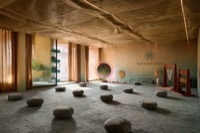
How Lifed curates programs.
Lifed is a global platform to book and host curated, real-world wellbeing programs. This guide explains program-review questions, the proposed research-grade framework, information requested from hosts and claims to avoid. Administrative review exists; universal application of the eight questions, research grades and independent host checks still requires confirmation.
How does Lifed decide which programs to list?
Healthmates submit programs for administrative review; administrators can approve, place on hold or reject them. The guide proposes eight questions: what it is for, how it builds, whether claims match the research, whether the language is honest, who should skip it, what happens if someone feels unwell, whether it is distinct, and whether the price clearly states its inclusions. These questions are not evidence that every program has passed an independent research, credential or safety audit.
Eight questions for reviewing a program.
The Healthmate terms describe building and refining programs with the team. The application supports submission, review comments, hold, rejection and approval. The questions below describe the guide’s proposed review standard; their completion is not an enforced eight-question publication checklist.
- Job
What is it for, in one sentence?
One sentence, written as a situation, such as “for people who can't switch off at night”.
- Structure
Does it build from day one to the last?
Check whether the days or sessions build on each other, and whether the length fits the purpose.
- Evidence
Does the page claim more than the research allows?
Assess each practice’s specific claims and sources, even inside one program. Per-practice evidence grades are a proposed editorial framework, not verified program ratings.
- Language
Is every word honest and non-clinical?
Avoid health promises, promised results and language implying clinical care. Mention a condition only where accurate and necessary, without implying treatment or suitability.
- Fit
Who should not book it?
Check who it is for and who should skip it, with physical demand stated plainly.
- Safety
What happens if someone feels unwell?
Ask what health information the host needs before participation and what route to care is available if someone feels unwell. The application’s review status does not establish universal clinical screening or emergency provision.
- Distinct
Is it made for Lifed, or copied from a brochure?
The Healthmate terms describe shaping programs with the team. Confirm what is distinct about the selected experience rather than assuming every package is exclusive to Lifed.
- Ready
What does the price include?
Review the price, inclusions, exclusions, logistics and cancellation terms before paying; confirm the selected package and final checkout total.
A proposed framework for describing research.
The source proposes the framework below to guide the strength of wording for each practice, even within one program. It is awaiting editorial and evidence review; the examples are not assigned LIFED program grades or a certification of clinical effectiveness.
| Grade | What it means | What a page may say | Examples |
|---|---|---|---|
Established | Proposed label for a specific benefit supported by several trials and reviews; the actual evidence must be assessed. | Source wording example: “Regular movement is associated with better health.” Check the specific claim and supporting evidence before use. | Physical activity, balance training for older adults — source examples, not assigned grades |
Moderate | Proposed label for consistent trials that are smaller or have limits; assess the specific practice and outcome. | Source wording under review: “Participants commonly report deeper rest.” Use only with verified participant evidence. | Massage, yoga, meditation, time in green space — source examples requiring claim-specific review |
Emerging | Proposed label for small studies, mostly self-reported; study quality and relevance still need review. | Source wording under review: “People often describe feeling calmer.” Nothing stronger; even this wording needs verified evidence. | Sound baths, digital detox, slow living — source examples, not verified effectiveness grades |
Traditional practice | Traditional descriptions are not clinical evidence. The amount and quality of controlled research must be assessed for each specific practice. | Describe the practice accurately without an unsupported outcome claim. | Kalaripayattu, Panchakarma, Ayurvedic tradition — source examples requiring separate evidence review |
Information requested from hosts.
Hosts on Lifed are called Healthmates: practitioners, centres, communities and organisers. Applications collect contact, expertise, identity and credibility documents, venue information and payout details for administrative review. The Healthmate terms also request the items below where relevant; collecting them is not proof of independent verification, certification or a property inspection.
- Identity or business registration documents, as requested by the Healthmate terms
- Qualifications, certifications or licences for the practice — supplied evidence requires appropriate verification
- Venue details: location, facilities and capacity — provided information, not a guaranteed physical inspection
- Program details: objective, structure, schedule, inclusions and price — submitted for review
- Payout details — collected for administration, not proof of a verified bank account
- Insurance, safety provisions and permits where relevant — requested in the terms; current coverage and approval checks require confirmation
Before any program goes live.
Programs move through administrative review before approval. The guide identifies the details below to confirm; an approval status or completed field does not establish independent credential checks, medical approval or guaranteed safety.
- Ask for an honest, hour-by-hour description of what actually happens; confirm the actual schedule
- Check stated contraindications and who the program is not suitable for; do not assume screening has established individual suitability
- Confirm the named facilitator, their supplied qualifications and whether they lead throughout
- Check the actual length: a 3-day stay and a 14-day protocol are different programs
- Ask for the actual route to care if a participant becomes unwell; administrative approval does not guarantee emergency or clinical supervision
- A wellbeing experience is not a substitute for medical or mental-health care
Claims to avoid
That a program can fix a health condition, or stop one startingThat anything is detox, purification or removes toxinsGuaranteed or “proven” resultsThat one practice's research applies to anotherPay-to-rank: the LIFED terms state that Healthmates cannot pay for placement or ranking
If a program page slips, tell us so the team can review it.
About Lifed
Lifed is a global platform to book and host curated, real-world wellbeing programs: residential stays and day programs across wellness, functional movement and recovery. Check each current listing’s verified location; the source describes a focus on Kerala, India.
LIFED’s existing Story describes its beginnings at JIPMER, Pondicherry, with the question: why do we only help people after they break? The site identifies Holobiont Private Limited as its operator. This history does not imply JIPMER approval, certification or clinical supervision.
From the Journal

Related searches
- What is Shirodhara, Abhyanga or Kizhi?
- Best time for Ayurveda in Kerala
- Ayurveda retreats in Kerala
- Wellness retreats in Kerala
- Women's retreat in Kerala
- Corporate wellness offsite in Kerala
Guides
- Ayurveda, yoga and Kalari, in plain English
- When to go: Kerala's wellness year, month by month
Tags
Questions, answered.
Can a host pay to be listed higher?
The LIFED terms state that Healthmates cannot pay for placement or ranking. This is the published policy; it is not an independent audit of every recommendation.
What happens if a program doesn't pass?
Administrators can put a submitted program on hold or reject it, and review comments support changes. The Healthmate terms describe refining programs with the host. Approval is recorded by an administrator; completion of all eight guide questions is not an enforced checklist.
Who does the curation?
The application provides administrative review by LIFED administrators. The source describes a team founded at JIPMER, Pondicherry, by a biostatistician, a cardiac perfusionist and a systems architect; the existing Story supports the founding account, while individual roles and the current curation team need editorial confirmation. This is not institutional endorsement.
Do you measure outcomes?
Before-and-after reflection is described in the source as planned; its rollout and any outcome-measurement process require confirmation. Existing wellbeing reflection is not clinical outcome validation. No program result is guaranteed.
Where do the evidence grades come from?
The source proposes using published research and a practice-specific evidence guide. A maintained evidence handbook, grading protocol and assigned per-practice grades have not been verified. Check the actual citations and specific claims on each page; a category label alone is not evidence.

Questions about how we choose?
Ask us about any program, any host or any claim on these pages. Contact the LIFED team for clarification; response arrangements and timing are not guaranteed.
Browse another way.
By kind of program


By life moment



By who it's for





By place






By practice